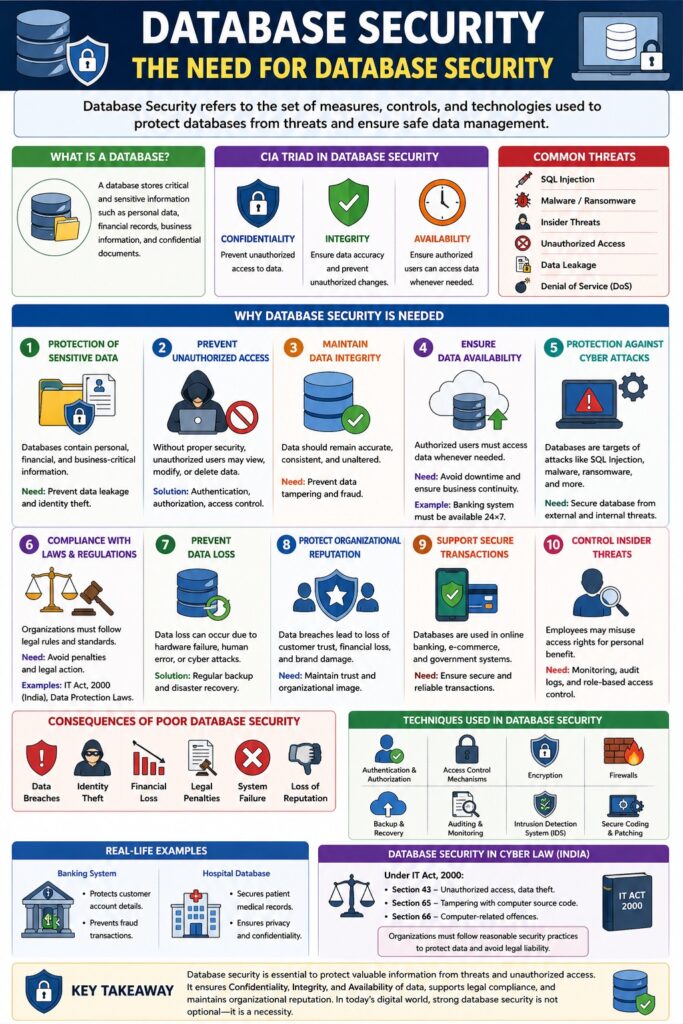
Database Security: The Need for Database Security
Introduction
A database stores critical and sensitive information such as personal data, financial records, business information, and confidential documents. Protecting this data is essential to prevent unauthorized access, misuse, or loss.
👉 Database Security refers to the set of measures, controls, and technologies used to protect databases from threats and ensure safe data management.
Why Database Security is Needed
1. Protection of Sensitive Data
Explanation
Databases contain confidential information like:
- Personal details (Aadhaar, phone numbers)
- Banking information
- Business secrets
Need
Prevent data leakage and identity theft.
2. Prevent Unauthorized Access
Explanation
Without proper security, unauthorized users may:
- View sensitive data
- Modify or delete records
Solution
Authentication, authorization, access control
3. Maintain Data Integrity
Explanation
Data should remain:
- Accurate
- Consistent
- Unaltered
Need
Prevent data tampering and fraud
4. Ensure Data Availability
Explanation
Authorized users must access data whenever needed.
Need
- Avoid downtime
- Ensure business continuity
📌 Example: Banking system must be available 24×7
5. Protection Against Cyber Attacks
Common Attacks
- SQL Injection
- Malware
- Ransomware
- Insider attacks
Need
Secure database from external and internal threats
6. Compliance with Laws and Regulations
Explanation
Organizations must follow legal rules:
- IT Act, 2000 (India)
- Data protection laws
Need
Avoid penalties and legal action
7. Prevent Data Loss
Causes
- Hardware failure
- Human error
- Cyber attacks
Solution
- Backup
- Disaster recovery
8. Protect Organizational Reputation
Explanation
Data breaches lead to:
- Loss of customer trust
- Financial loss
- Brand damage
9. Support Secure Transactions
Explanation
Databases are used in:
- Online banking
- E-commerce
- Government systems
Need
Ensure secure and reliable transactions
10. Control Insider Threats
Explanation
Employees may misuse access rights.
Need
- Monitoring
- Audit logs
- Role-based access control
Database Security and CIA Triad
| CIA Component | Role in Database Security |
|---|---|
| Confidentiality | Prevent unauthorized data access |
| Integrity | Ensure data accuracy |
| Availability | Ensure data access when needed |
Real-Life Examples
Example 1: Banking System
- Protect customer account details
- Prevent fraud transactions
Example 2: Hospital Database
- Secure patient medical records
- Ensure privacy and confidentiality
Consequences of Poor Database Security
- Data breaches
- Identity theft
- Financial loss
- Legal penalties
- System failure
Techniques Used in Database Security
- Authentication and authorization
- Encryption
- Firewalls
- Backup and recovery
- Access control mechanisms
Database Security in Cyber Law (India)
Under IT Act, 2000:
- Section 43 → Unauthorized access
- Section 65 → Data tampering
- Section 66 → Cyber offences
📌 Organizations must follow reasonable security practices.
Advantages of Database Security
- Protects sensitive data
- Ensures trust and reliability
- Supports business continuity
- Helps in legal compliance
Conclusion
Database security is essential to protect valuable information from threats and unauthorized access. It ensures confidentiality, integrity, and availability of data, supports legal compliance, and maintains organizational reputation. In today’s digital world, strong database security is not optional—it is a necessity.
📘 MCA Exam Tip
For 10–15 marks:
- Define database security
- Explain 8–10 needs
- Link with CIA Triad
- Add examples
- Write conclusion